
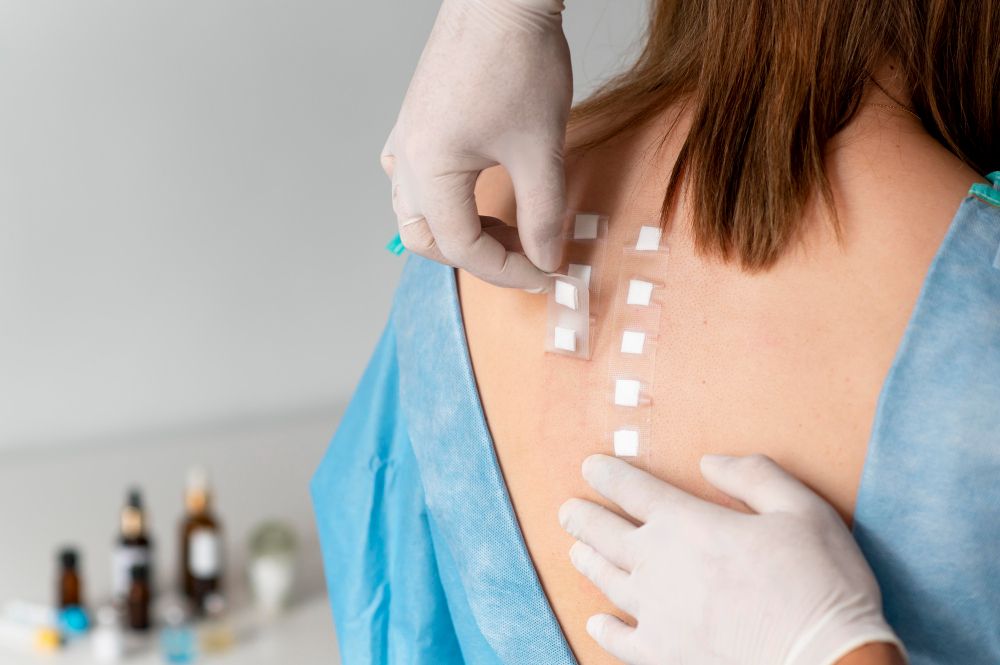
What is Patch Testing?
Patch testing is a safe way to find out if your skin reacts to certain substances. Doctors use it to check for skin allergies. In fact, patch testing helps find the cause of rashes or irritation. It is different from other allergy tests because it checks for delayed skin reactions. Many people ask, “How does patch testing work?” Simply put, small amounts of possible allergens are placed on your skin. Then, your doctor watches for any reaction.
Why is Patch Testing Done?
Doctors use patch testing for skin allergies. It helps find out if you are allergic to things like metals, perfumes, or rubber. Often, people with eczema or unexplained rashes need this test. For example, if you keep getting a rash from jewelry, patch testing can help. This test is important because it guides your treatment. It also helps you avoid things that cause your skin problems.
How to Prepare for Patch Testing
Before your patch test procedure, your doctor will give you instructions. Usually, you should:
Because the test takes several days, plan your schedule. You may need to avoid activities that make you sweat a lot.
The Patch Testing Procedure: Step-by-Step
Many people wonder about the patch test procedure. Here is what usually happens:
This step-by-step process helps your doctor see if your skin reacts to any substance.
What to Expect During and After Patch Testing
During patch testing, you may feel mild itching or discomfort. However, most people do not feel pain. While the patches are on, avoid scratching or getting them wet. After the patches are removed, your skin may look red or bumpy. This is normal. Sometimes, you may have mild itching for a few days. If you notice severe redness, swelling, or pain, tell your doctor right away. Usually, you can return to normal activities after the test.
Understanding Patch Test Results
Patch test results explained simply: If your skin reacts to a substance, you may see redness, swelling, or a small blister. This means you are likely allergic to that item. If there is no reaction, you are probably not allergic. Your doctor will discuss the results with you. They will explain what each reaction means. Based on the results, your doctor will suggest how to avoid triggers and manage your skin.
Risks and Side Effects
Patch testing is safe for most people. However, there are some risks. For example, you may have mild redness or itching. Rarely, you may get a stronger reaction, like a blister. In very rare cases, your skin may stay dark or light in the tested area. If you have a history of severe allergies, tell your doctor before the test. Most side effects go away on their own.
Tips for Best Results and Aftercare
To get the most accurate patch test results, follow these tips:
After the test, avoid known triggers and follow your doctor’s advice for skin care.
Conclusion
Patch testing is a simple, safe, and effective way to identify skin allergies. It helps uncover the specific substances causing irritation, ensuring a targeted treatment plan. If you experience persistent rashes, itching, or unexplained breakouts, this test can help you find the root cause.
For expert patch testing and personalised skin allergy care, consult Skin Rituals — where healthy, balanced skin begins.